
Sustainability is no longer a nice-to-have. It’s essential for our planet’s future. To meet customer…
7 Ways to Safeguard Rural Solar Farms Against Theft
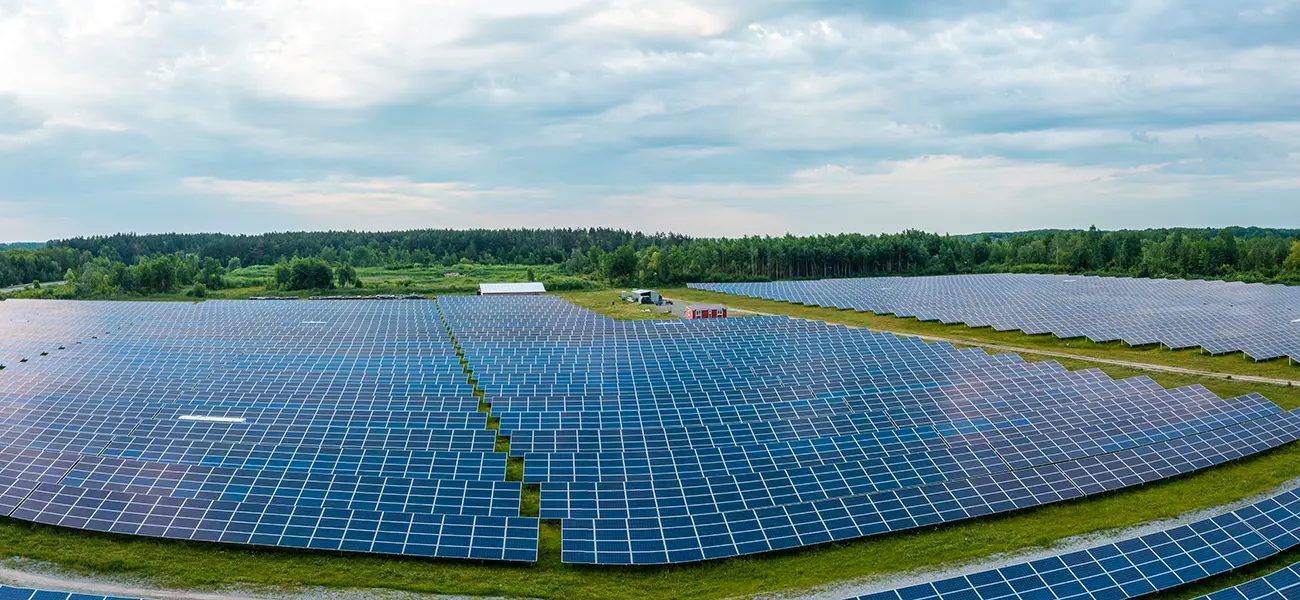
The increasing number of solar farms is a ray of sunshine for organised crime gangs. With vast quantities of solar panels, copper cabling and inverters all in one place, they can steal a fortune in a single swoop.
To them, it’s a risk worth taking. Solar farms are often in rural, isolated locations with few passers by to raise the alarm. Moreover, cash-strapped farmers urgently need the revenue associated with giving over their land to green energy. That has led to solar farms being installed fast — with valuable equipment on site before adequate security is in place.
In this article, we’re exploring 7 ways to safeguard rural solar farms against theft.
1. Robust perimeter security
Standard livestock fencing may have done a good job when the field was used for agriculture. However, it’s not enough for a solar field.
Perimeter fencing is your first line of defence. It needs to present a robust physical barrier to criminals looking for easy access and a fast getaway. When perimeter fencing takes a long time to break through, and makes unauthorised vehicle access virtually impossible, stealing from the site will be an unappealing prospect.
For solar farms, UK police recommend fencing designed to British anti-intrusion standards (BS 1722-14). In practice, this means open-mesh, steel panel fencing with small apertures which are resistant to both climbing and cutting.
If possible, reduce the number of vehicle access points — preferably to a single, well-defended point — and consider automatic systems like rising kerbs or bollards to block unauthorised vehicle access.
Bear in mind that local regulations and planning permissions vary, so check with your Local Authority before installation. In the meantime, the following may be useful from a practical and environmental perspective:
- The minimum recommended height for solar panel fencing is 2.5 metres
- Limit the view of solar panels from the road and restrict access with native vegetation
- Install mammal gates to allow the passage of wildlife such as badgers and foxes
- To blend with the natural environment, use black fencing rather than green
2. Perimeter intrusion detection systems
A perimeter intrusion detection system (PIDS) does what it says on the tin. If someone tries to breach the perimeter, operators get a real-time alert. This allows security teams to intervene fast, before an intruder has time to cause serious damage.
Intrusion detection systems can be particularly useful when placed at remote corners of the site because hard-to-reach areas are a common access point for thieves.
There are several types of PIDS available, including:
- Fence-mounted sensors — An alarm is triggered if the fence is climbed or cut
- Infrared (IR) sensors and passive infrared (PIR) sensors — They raise the alarm if movement is detected along the perimeter
- Vibration sensors — Either fence-mounted to detect attempts at climbing and cutting, or buried to identify ground vibrations from intruders
Most modern systems use AI to differentiate between humans, vehicles and animals — a crucial requirement for rural locations.
3. CCTV towers
CCTV towers are easy to set up, weatherproof, highly mobile and one of the most effective deterrents on the market. Standing at 6 metres tall, with 360° high-definition coverage, it’s almost impossible for an intruder to hide from the cameras.
There are several advantages to CCTV towers when it comes to solar farms.
- They operate through solar power, with no need for mains electricity or an internet connection
- PTZ (pan-tilt-zoom) cameras use infrared night vision, eliminating light pollution
- They deliver clear, HD-quality images across a large area
- Thermal sensors can detect individuals and vehicles in fog, darkness and any weather conditions
- Towers can be quickly moved to wherever they’re most needed
4. Remote CCTV monitoring
High-quality CCTV footage provides valuable prosecution and insurance evidence — but it doesn’t stop the crime from taking place.
Pairing CCTV with remote monitoring gives you a crucial real-time response to security incidents. When there’s an alert, trained responders at an alarm receiving centre (ARC) are ready to take action. They monitor the footage and immediately follow up with a range of responses, including alerting the police.
Effectively, remote monitoring gives you high-tech surveillance combined with human judgement and expertise. Should the alarm turn out to be false, it saves unnecessary attendance by the emergency services. When there’s a genuine threat, criminals can be stopped in their tracks, before they escape with valuable equipment.
5. Mobile patrols
Solar farms are especially vulnerable at night. Criminals use the darkness as a shield, believing that it reduces their risk of getting caught.
By visiting frequently yet randomly during the night and at weekends, mobile security patrols make things extremely difficult for potential thieves. The visible presence of SIA-licensed security officers is a strong deterrent. Criminals are unable to predict when a patrol will arrive, so they have no window of opportunity.
Additionally, mobile patrols work hand-in-hand with ARC personnel. When there’s a security incident at a remote solar farm, a patrol will be deployed immediately. These highly-trained officers can often be first on the scene, and will deal calmly and professionally with the situation until the emergency services arrive.
6. Secure, tamper-proof fixings
Solar farm security doesn’t stop at the perimeter. It’s also about making solar panels as difficult as possible to remove, and risky to sell on.
Consider investing in specialist, reinforced mounting structures with anti-tamper screws and locking bolts. For an additional layer of security, the panels can be fitted with locking clamps. Removing them requires specialist tools, time and effort — unappealing to criminals looking for a quick getaway.
To make solar panels even more unattractive to thieves, mark them with unique identification numbers. They become harder to sell, easier to trace and, if stolen, more likely to be recovered.
- Use UV-etched serial numbers or microdot markings to provide permanent, unique identification
- Apply tamper-proof security labels
- Register the panels on police and industry databases
- Put up highly visible signs saying that all panels are marked and traceable
7. Smart security technology
The best way to deter today’s smart, tech-savvy criminals is to get equally smart with the security technology you deploy. Nowadays, there’s a wide choice of integrated, AI-powered security systems which operate autonomously and improve their own performance without human intervention.
For example, automated access control systems can scan someone’s security credentials, facial features and other biometrics to make sure they are authorised to enter the site. CCTV can be integrated with automatic number plate recognition (ANPR) and access control systems, opening gates or lowering bollards only for authorised vehicles.
These types of systems not only provide high-level security, they also serve as a powerful deterrent to potential criminals. When a solar farm is equipped with smart security technology, thieves know that it’s simply not worth the risk.
For a no-obligation conversation about security options to protect your solar farm, please get in touch with the CSG team. We’d be happy to help.
Related Posts


